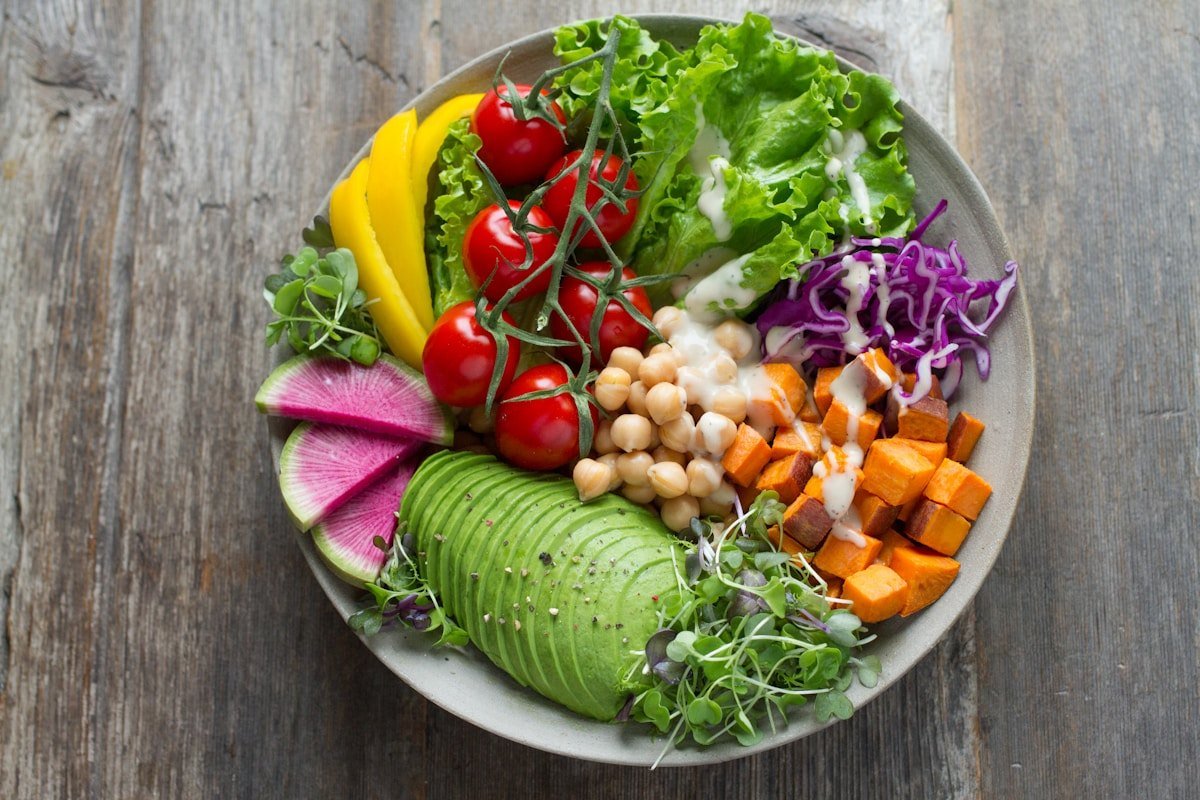
Start with variety, not a perfect formula
Eating well doesn’t have to mean reinventing every meal. A balanced plate is a flexible way to think about nourishment: bring together a variety of foods, choose portions that work for you, and leave room for enjoyment.
Vegetables and fruit, whole grains, protein foods, and dairy or fortified alternatives can each play a role. You don’t need every food group in every bite—or a meal that looks like a magazine photograph. What matters more is the pattern you build over time.
A helpful starting point: look at a meal you already enjoy and ask, “What could I add to make this a little more varied?” An addition is often easier than a complete overhaul.
Build around the foods you already love
The USDA’s MyPlate offers a simple visual: aim to make about half your plate fruits and vegetables, with the rest including grains and protein. It’s a starting point, not an exact rule for every person or every dish.
- Bring in some color. Add vegetables to a sandwich, stir frozen peas into rice, or serve a piece of fruit alongside breakfast. Fresh, frozen, and canned options can all be useful.
- Include a protein food. Beans, lentils, tofu, eggs, fish, poultry, and other protein choices can fit different preferences and budgets.
- Make room for whole grains. Try oats, brown rice, whole-wheat bread, or another grain you enjoy. Start by swapping one familiar option.
- Think beyond the plate. Water is a straightforward everyday drink. Milk or an appropriate fortified alternative can contribute nutrients, depending on your needs.
For mixed dishes—soups, curries, pasta, or a rice bowl—think about the ingredients rather than separating everything into sections. A comforting family meal can be balanced without losing what makes it yours.
Make the practical choice the easy choice
A healthy routine is more useful when it works on a busy day. Keep a few convenient building blocks around: frozen vegetables, canned beans, eggs, oats, or whatever suits your kitchen. Rinsing canned beans and choosing lower-sodium options can help you manage added salt.
You might prepare one versatile ingredient ahead of time, rather than an entire week of identical meals. A pot of rice or a tray of vegetables can become several different lunches and dinners.
Cost, culture, appetite, food access, and personal preference all matter. “Balanced” should leave room for your circumstances, not create another standard to fall short of.
Leave room for your individual needs
No single plate guide suits everyone. Children, pregnant people, athletes, older adults, and people managing medical conditions may have different needs. Allergies, digestive conditions, medications, and a history of disordered eating can also change what helpful nutrition guidance looks like.
A registered dietitian or your healthcare professional can help you adapt general ideas to your situation. If a meal plan makes you anxious, leaves you feeling unwell, or conflicts with medical advice you’ve received, pause and ask for support.
For today, keep the next step small: add a vegetable you like, try a new bean, or sit down to enjoy a meal without rushing. Nourishment is a practice, not a test.
Explore the guidance
This article provides general educational information, not personalized medical advice. Speak with a qualified healthcare professional about your individual needs, especially before changing treatment, activity, or dietary routines.